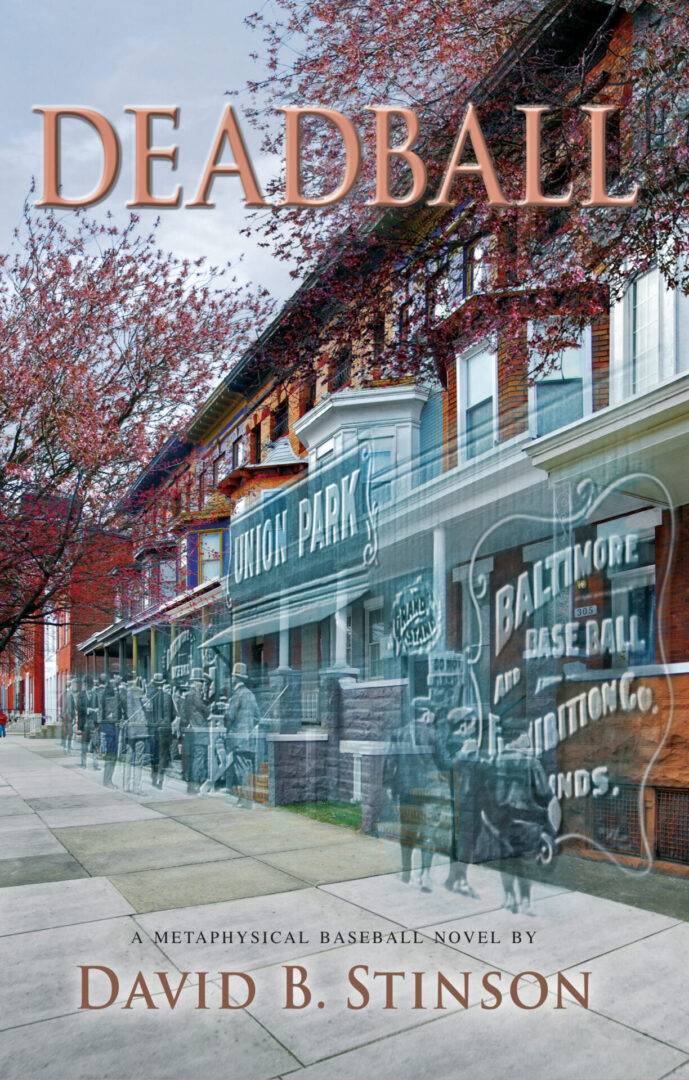
Fulton County Stadium Redux

April 5th, 2012
by Byron Bennett

The Georgia Historical Society and Georgia Public Broadcasting honor the memory of Fulton County Stadium on April 15th as part of their joint collaboration Today in Georgia History. The one minute video includes some pictures from my 2010 blog about Fulton County Stadium on Deadballbaseball.com Fulton County Stadium Makes A Great Parking Lot. Atlanta broke ground on Fulton County Stadium on April 15, 1964. The Braves arrived two years later.

Click here: Today in Georgia History to watch the video.

Click here: Credits and Bibliography for additional information about Fulton County Stadium from the Georgia Historical Society.

Tags: , , , ,
Posted in Fulton County Stadium, Georgia ballparks | Comments (0)

Forbes Field – Game Over

March 11th, 2012
by Byron Bennett

My earlier post, Forbes Field and the University of Pittsburgh, focuses on the portion of the original outfield wall that remains at the former site of Forbes Field, now part of the University of Pittsburgh.

Forbes Field Postcard (Published by Minsky Bros. & Co. Pittsburgh)


The original outfield wall is not the only artifact of Forbes Field remaining at the site.

Pennsylvania Historical Plaque for Forbes Field

The former location of home plate is inside Wesley Posvar Hall, a six-story building constructed by the University of Pittsburgh in the mid 1970′s.

University of Pittsburgh's Wesley Posvar Hall

A plaque outside Posvar Hall recognizes Barney Dreyfus, owner of the Pittsburgh Pirates from 1900 to 1932.

Pennsylvania Historical Plaque Honoring Barney Dreyfuss

The actual home plate from Forbes Field is encased in glass and set into the floor in its approximate former location.

Forbes Field Home Plate

Hung on a wall next to home plate  is a photograph of Forbes Field taken from the Cathedral of Learning, which is located several blocks beyond what was once left field.

Former and Present Location of Forbes Field Home Plate

About 90 feet from home plate inside Posvar Hall, about where third base would have been, is an oil portrait of Wesley W. Posvar, the University’s 15th chancellor.

Oil Painting of Chancellor Posvar

Outside Posvar Hall is a line of of bricks that lead across Roberto Clemente Drive to where the remnants of the outfield wall begin. About 15 feet tall, and perhaps 180 feet long, the wall is constructed of red brick and divided by concrete columns spaced 12 feet apart.  The columns are covered in green paint and the wall is capped with blocks of weathered grey granite. Next to the wall is the original center field flag pole.

Original Forbes Field Wall on Campus of University of Pittsburgh

The wall ends at what once was the right-field pavilion.  For additional pictures of the Forbes Field wall, check out my earlier post, Forbes Field and the University of Pittsburgh.

Backside of Forbes Field Wall with Posvar Hall Visible Beyond Wall

Behind the Forbes Field wall is a youth baseball diamond.

Youth Baseball Diamond Behind Forbes Field Wall (to the right)

Also behind the wall is a replica of the entrance to Forbes Field.

Replica Entrance to Forbes Field

Constructed of wood, the entrance way replicates the cream-colored, tiled facade of Forbes Field.

Sign Attached to Replica of Forbes Field's Entrance

Behind what would have been the right field pavilion is the top landing of a concrete stairway with painted aqua green pipe hand rails.  The stairway once provided ballpark access for fans arriving from Joncaire Street in Panther Hollow.

Stairway Behind Forbes Field's Right Field Pavilion

Although Forbes Field is now just another lost ballpark, what remains at the site is well worth a stop for any baseball fan passing through Pittsburgh.

Tags: , , , , , , , , , , , , , ,
Posted in Forbes Field, Pennsylvania ballparks | Comments (0)

Union Park – Home of the World Champion National League Baltimore Orioles

February 19th, 2012
by Byron Bennett

Union Park lasted as a major league venue for a mere nine seasons, from 1891 to 1899.  Home of the World Champion (1894-1896) National League Baltimore Orioles, Union Park was located at the corner of East 25th Street and Guilford Avenue in the Barclay section of Baltimore, just south of Harwood.

Union Park, Baltimore, Home of the National League Orioles, circa 1897

In the picture above, the houses immediately to the right of the grandstand are located on East 25th Street.  The houses on the right side of the picture, looming behind left center field, are located on Barclay Street.  Many of those houses remain at the site today, providing a point of reference for the ball field.

Back Side of 321 East 25th Street, Former Site of Union Park, Baltimore

The back side of the building located at 321 East 25th Street, which currently houses the St. Ambrose Housing Aid Center, with its distinctive pitched roof, can seen in the 1897 photograph, immediately to the right of the grandstand.

Houses on East Side of Barclay Street, Baltimore

The houses on the east side of Barclay Street are visible in the 1897 photograph of Union Park, just behind the bleachers in left field.

Corner of East 25th Street and Barclay, Baltimore

In the above photograph – the corner of East 25th Street and Barclay –  the house to the left was built on what would have once been Union Park’s center field.

Former Site of Union Park Left and Center Field Bleachers, Baltimore

The houses on the west side of Barclay Street, looking toward East 25th Street, pictured above, sit in place of Union Park’s left and center field bleachers.

Former Right Field Corner of Union Park, Baltimore

Union Park’s right field was located at the corner of East 24th Street and Guilford Avenue, which is seen in the above photograph, looking on East 24th Street toward Guilford.  The brick buildings to the right of the picture along East 24th Street were constructed after the demolition of Union Park.

Union Park, East 25th Street, Baltimore, circa 1895 (photo courtesy of the Maryland Historical Society)

The above photograph shows the entrance to Union Park on East 25th Street.  The brick building in the background, beyond the wooden ballpark, remains today at the site.  It is the same building mentioned above that was located just to the right of the Union Park grandstand, and sits at 321 East 25th Street.

Former Location of Entrance to Union Park, Baltimore

The red brick building at 321 East 25th Street is visible in the background of the above photograph.   To the right of that building is Falls Alley, which allows entrance into the former playing field from East 25th Street.

Building to the Right of Falls Alley, Gateway to Union Park's Former Playing Field

The row houses contructed on the site of Union Park’s former grandstand date to the early 1920s.

Former Site of Union Park Grandstand

Still remaining at the former site of Union Park is a short red brick wall with an iron gate entrance that once stood next to the Union Park grandstand.  That area can be seen in the 1895 photograph of Union Park, next to 321 East 25th Street.

Iron Gate Remaining from Time of Union Park, Baltimore

It is estimated that home plate sat behind the row house that currently sits at 313 East 25th Street.

Former Location of Home Plate, Union Park, Baltimore

The area that was once the infield is now a parking lot and a collection of brick garages –  an unceremonious use of such hallowed ground.

Former Location of First Base Grandstand, Union Park, Baltimore

Although Union Park was wiped from the landscape over 100 years ago, the neighborhood surrounding the former site offers several clues to the ballpark’s location.  It certainly is worth a trip for any fans of the Baltimore Orioles.  With the demolition 10 years ago of Memorial Stadium, there currently exists no baseball venue in Baltimore where the Orioles have won a World Championship.

Tags: , , , , , , , , , , ,
Posted in Maryland ballparks, Union Park | Comments (2)

Memorial Stadium – Time Will Not Dim the Glory of Their Deeds

February 12th, 2012
by Byron Bennett

Memorial Stadium in Baltimore, Maryland, was the home of the American League Baltimore Orioles from 1954 through the 1991 season.

Memorial Stadium, Baltimore, Maryland (Pub. by D. E. Traub)

The National Football League  Baltimore Colts played at Memorial Stadium from 1953 through the 1983 season.

Memorial Stadium, Baltimore, Maryland (Photo by G.B. Smith/Pub. by Traub Co.)

Memorial Stadium was built on the site of an earlier stadium, known as Baltimore Stadium, Venable Stadium or Municipal Stadium, which was constructed in 1922.

Baltimore Stadium (Pub. by James F. Hughes Co.)

For a time after the death of Baltimore native Babe Ruth, the structure was known as Babe Ruth Stadium Stadium.

Babe Ruth Stadium, Baltimore, Maryland (Pub. by I & M Ottenheimer)

In 1949, construction began converting Municipal Stadium to Memorial Stadium.

Baby- Obstructed View of Memorial Stadium, Baltimore

The stadium was dedicated “As a memorial to all who so valiantly fought and served in the World Wars with eternal gratitude to those who made the ultimate supreme sacrifice to preserve equality and freedom throughout the world.  Time will not dim the glory of their deeds.”

Memorial Plaque of Memorial Stadium, Baltimore

An unofficial name for Memorial Stadium was the Old Grey Lady of 33rd Street.

The View from Right Field Bleachers, Memorial Stadium, Baltimore

The seating in the upper reaches of the stadium and throughout the uncovered, outfield bleachers, was bench seating.

Right Field Bleachers, Memorial Stadium, Baltimore

The press box was located behind home plate between the upper and lower decks.  Steel camera decks were located to the right and left of the press box.

The Press Box, Memorial Stadium, Baltimore

When not in use by the media, they provided an excellent view of the proceedings below.

First Base Side Seating Bowl, Memorial Stadium

Once the Orioles departed after the end of the 1991 season, Memorial Stadium hosted other sport teams including the minor league Bowie Baysox in 1993 and 1994 (partial season), the Baltimore Stallions of the Canadian Football League in 1994 and 1995, and the National Football League Baltimore Ravens in 1996 and 1997.

Inaugural Preseason Game, Baltimore Ravens at Memorial Stadium

The Ravens’ two seasons at Memorial Stadium would be the final professional sports games ever played there.

The Sun Sets and the Lights Go Up at Memorial Stadium

The Baltimore sports world turned its attention 30 blocks south of Memorial Stadium, to where where the Maryland Stadium Authority had constructed the city’s new stadia.

The View of the Baltimore Skyline From the Top Row of Memorial Stadium

Once the Ravens departed, there was nothing to do but wait for Memorial Stadium’s demolition.

The Barren Fields of Memorial Stadium

In May 2000, the Maryland Stadium Authority gave Baltimore sports fans one last chance to visit the stadium and its playing field.

They Used To Play Baseball Here, Memorial Stadium, Baltimore

By that time, workers already had marked items, including signage, which was to be removed prior to demolition.

Section 40 Upper Deck, Memorial Stadium, Baltimore

Ultimately, the lockers from the players’ dressing rooms were removed and sold as part of an auction held by the Babe Ruth Museum.

Memorial Stadium Locker Room with Young Fans Sitting in the Locker of Cal Ripken, Jr.

The majestic light stanchions were torn down and sold for scrap.

Right Field Light Stanchion, Memorial Stadium, Baltimore

Astroturf, presumably used on the sidelines and the areas around the Raven’s grid iron, was rolled up and left in piles outside the stadium.

Astroturf From the Ravens Stay at Memorial Stadium, Baltimore

The end game for Memorial Stadium wasn’t pretty.  A valiant fight by preservationists held off destruction of the stadium’s front facade and memorial plaque while the city debated whether a portion of the structure was worth saving.

Almost Gone, Memorial Stadium, Baltimore

Ultimately, the preservationists and those who care about history lost, and the remaining portion of Memorial Stadium met the wrecking ball.

A Sad View, Memorial Stadium, Baltimore

One of the last vestiges of Memorial Stadium was the outfield scoreboard.  If my wife would have let me, I would have bought it and moved it to my back yard. Whether the neighbors would have complained became a moot point.

Only the Scoreboard Remained, Memorial Stadium, Baltimore

Which brings us to what was built in the place of Memorial Stadium.  First was a much-needed youth center in the form of the Harry and Janette Weinberg Family Center at Stadium Place.

The Harry and Janette YMCA at Stadium Place, former site of Memorial Stadium

Inside the YMCA’s gymnasium is signage from Memorial Stadium’s Ring of Honor which once graced the facade between the upper and lower decks.

YMCA Gymnasium at Former Site of Memorial Stadium

The names of prominent Orioles and Colts ring the gymnasium. At an autograph show in 2006, Frank Robinson signed autographs beneath his Ring of Honor sign.

Oriole Hall of Famer Frank Robinson Standing Beneath the Ring of Honor Sign Bearing His Name

For several years after Memorial Stadium’s demolition, all that marked the lost ballpark was a home plate placed in the approximate location of the original.

Young Orioles' Fan Standing at the Site of Home Plate, Memorial Stadium

In 2010, that changed, thanks to the vision, talent, and generosity of Cal Ripken, Jr., and his brother Bill Ripken.  The Ripkens, with the help of the Cal Ripken, Sr. Foundation, and other charitable groups and donors, constructed a youth ball field on the former site of Memorial Stadium.

Memorial Field at Former Site of Memorial Stadium

A plaque placed behind home plate notes:   “This is the very site where so many where so many Baltimore legends once played and represented our city with pride.  In 2010, the Cal Ripken, Sr., Foundation dedicates this field creating a safe, clean place for kids to play, learn and grow.”

Plaque Honoring Memorial Stadium, at Stadium Place

A separate plaque honors the vision and contributions that Cal Ripken, Sr., made to baseball.

Plaque Honoring Cal Ripken, Sr, at Stadium Place, former site of Memorial Stadium

The playing surface of Memorial Field is AstroTurf Game Day grass.

Artificial Playing Surface Marks the Former Playing Surface of Memorial Stadium

The Ripkens’ vision and generosity has brought baseball (and football) back to the playing field at the former site of Memorial Stadium.

It's Good to be Home, the Former Site of Memorial Stadium

In the former location of right field and the seating bowl along first base is housing for senior citizens.

Senior Citizen Housing Located on the Former Site of Memorial Stadium's Right Field

In deep center field, a goal post once again stands in the approximate location of the northern most goal post of Memorial Stadium.

A Goal Post Rises Again on the Former Site of Memorial Stadium

The Baltimore Orioles also have done their share to commemorate Memorial Stadium by constructing a plaza in honor of the ballpark, complete with some of the lettering from the orginal stadium plaque, which says “Time will not dim the glory of their deeds.”

Memorial Stadium Plaque Reborn at Camden Yards

An urn that once was encased in the wall of Memorial Stadium is on display next to the Memorial Wall at Camden Yards.

Urn Containing Earth From United States Military Cemeteries on Display at Camden Yards

A separate granite plaque at Camden Yards also commemorates the memory of Memorial Stadium.

Camden Yards Granite Plaque Commemorating Memorial Stadium

The Sports Legends Museum likewise includes displays honoring the memory of Memorial Stadium.

Original Memorial Stadium Dedication Plaque

The original 1954 Memorial Stadium corner stone is located in a display in the basement of  the Sports Legends Museum.

Memorial Stadium Corner Stone

The museum also includes a variety of items from Memorial Stadium, including signage and stadium seats.

Memorial Stadium Display at Sports Legends Museum

One final tribute to Memorial Stadium can be found at the Cal Ripken baseball Academy complex in Aberdeen, Maryland.  One of the many youth baseball fields is named in honor of Memorial Stadium

Memorial Stadium Plaque at the Ripken Academy, Aberdeen, Maryland

Once again, the Ripken Brothers have done a fine job keeping the memory of Memorial Stadium alive and giving young baseball fans a chance to play in the shadow of Memorial Stadium.

Memorial Stadium Located at the Ripken Academy in Aberdeen, Maryland

While Memorial Stadium has joined the every-growing list of lost ballparks, its memory lives on, not only at the site of the former ballpark, but in locations in and around Baltimore.  I even have a few stadium seats from Memorial Stadium lined up in my basement, awaiting the next game.

Tags: , , , , , , , , , , , , , , , , , , , , , , , , , ,
Posted in Maryland ballparks, Memorial Stadium | Comments (2)

Welcome to Royston, Home of Baseball’s Immortal Ty Cobb

November 9th, 2011
by Byron Bennett

Born in 1886 in Narrows, Georgia, Tyrus Raymond “Ty” Cobb moved with his family at an early age to Royston, Georgia.

Sign On Highway 8 Welcoming Visitors to Royston, Home of Ty Cobb

The sign located east of the town on Highway 8 is a vinyl reproduction of a painted plywood sign erected by the Royston Chamber of Commerce when Cobb was still alive.

Original Royston Welcome Sign with Ty Cobb Posing Below (copy of photograph on display at Ty Cobb Museum)

At one point there were four of these signs posted on the two major highways that run through Royston, Highways 8 and 17.  The only other sign currently standing is the one located north of the town on Highway 17.

Royston Welcome Sign Located North of Town On Highway 17

The original Welcome to Royston civic  sign sits opposite the Ty Cobb sign  on Highway 17 north of town.

Welcome To Royston Civic Sign

The town of Royston has many monuments and tributes to Cobb.  After retiring from baseball, Cobb donated a significant amount of money in his parent’s name to build a hospital in Royston for the people of Franklin County, Georgia.

Ty Cobb Healthcare System and Museum

Several buildings in Royston now honor Cobb and his philanthropic endeavors on behalf of the people of Franklin County. The Ty Cobb Healthcare System building is located on Highway 8 as you enter town from the west.

Ty Cobb Health Center

The Ty Cobb Museum alone is worth a stop in Royston.  Once located in the Royston Civic Center, the museum now resides in the Joe A. Adams Professional Building on Cook Street, across the street from the building housing the Ty Cobb Healthcare System.

Ty Cobb Museum Located In The Joe A. Adams Professional Building

The museum includes several displays honoring the baseball life  of Ty Cobb.

Display in Ty Cobb Museum

Of note in the museum is a Cobb’s 1907 American League Batting Champion Metal and a pair of his cleats.

Display at the Ty Cobb Museum

The Cobb Theater includes a short movie on the baseball life of Ty Cobb.

Ty Cobb Museum Movie Theater

Unfortunately, there is little  in the town of Royston that actually gives visitors a feel for Cobb as a private citizen living in Royston.  The boyhood home where he lived (and where his mother shot his father to death – allegedly having mistaken him for an intruder) no longer stands.  Its location is now, ironically, the parking lot for a funeral home.  The Pruitt Funeral Home is located at 47 Franklin Springs Street.

Pruitt Funeral Home Royston Georgia

The parking lot where Cobb’s house once stood is between the funeral home and the Royston First United Methodist Church, 137 Franklin Springs Street.

Pruitt Funeral Home Parking Lot - Former Site of Ty Cobb Boyhood Home

Some of the buildings located at the center of town date to the time of Cobb’s boyhood in Royston.  One of the most significant is the Joe T. Cunningham Furniture Store on Church Street, near the corner of Church and Franklin Springs Street.

Cunningham Furniture Store

Cobb and Joe Cunningham were close friends.  Cunningham, a cabinet and casket maker, used to make baseball bats for Cobb.  Inside the furniture store building, which currently houses Joe T. Cunningham Interiors, run by his granddaughter, is a display featuring pictures  of Cobb and his life  in Royston.

Cunningham Display Paying Tribute To Ty Cobb

Other buildings relevant to Cobb’s life in Royston include the former post office building at 963 Church Street.

Old Post Office

Across the street from the old post office at 964 Church Street is Jacksons On Main – Antiques and Collectibles – which sells a limited amount of Cobb baseball memorabilia.

Store That Sells Ty Cobb Memorabilia

One door down from Joe T. Cunningham’s Furniture Store, at the corner of Church Street and Franklin Springs Street, is a mural celebrating Cobb’s baseball career.

Ty Cobb Mural Downtown Royston

A Georgia State historical marker located in front of the Royston City Hall at 634 Franklin Springs Street honors Cobb, “the Georgia Peach.”

Georgia State Historical Marker Ty Cobb "The Georgia Peach"

City Hall, also known as the Ty Cobb Memorial Civic Center, includes a plaza with a granite monument erected in memory of Cobb.

i

Ty Cobb Memorial Civic Center


Ty Cobb Memorial Civic Center Plaza

Cobb’s granite monument stands approximately eight feet tall.

Royston's Ty Cobb Monument

The front of the monument includes a likeness of  Cobb wearing his Detroit Tigers uniform, bat in hand.

Detail of Ty Cobb Monument

The back side of the monument lists some of his many baseball accomplishments.

Back of Ty Cobb Monument

Other Royston tributes to Cobb include the town crest that adorns Royston’s municipal vehicles.

Royston City Truck Adorned With Image Of Ty Cobb

The housing development located behind city hall is named “Cobb Walk” in honor of the town’s favorite son.

Cobb Walk Housing Development In Royston Georgia

Cobb is buried on the outskirts of Royston in Rose Hill Cemetery, located on Old Elbert Road, a quarter mile off Highway 17 (Church Street).

Pavilion Next To Ty Cobb Burial Site

Cobb helped choose the mausoleum design which now holds his remains.

Ty Cobb Burial Site, Rose Hill Cemetery

Royston, Georgia, does not qualify as a lost ballpark.  However it is worth a mention and a visit, given its connection to one of the greatest baseball players. Although the town includes many tributes to the great Ty Cobb, the town itself offers little in the way of attractions that help visitors appreciate the town as he knew it.  Cobb played baseball in and around Royston for many years before leaving to play professional ball.  Perhaps baseball fans in Royston could somehow determine where those fields were located.  A plaque noting their location would allow visitors to stand on the same spot where young Ty Cobb honed his baseball skills, which would go a long way toward connecting the town of Royston to its favorite, famous son.


Tags: , , , , , , , , , , , , , , , , , , ,
Posted in Georgia ballparks, Ty Cobb Hometown | Comments (0)

I Still Can’t Believe They Tore Down Old Yankee Stadium

October 18th, 2011
by Byron Bennett

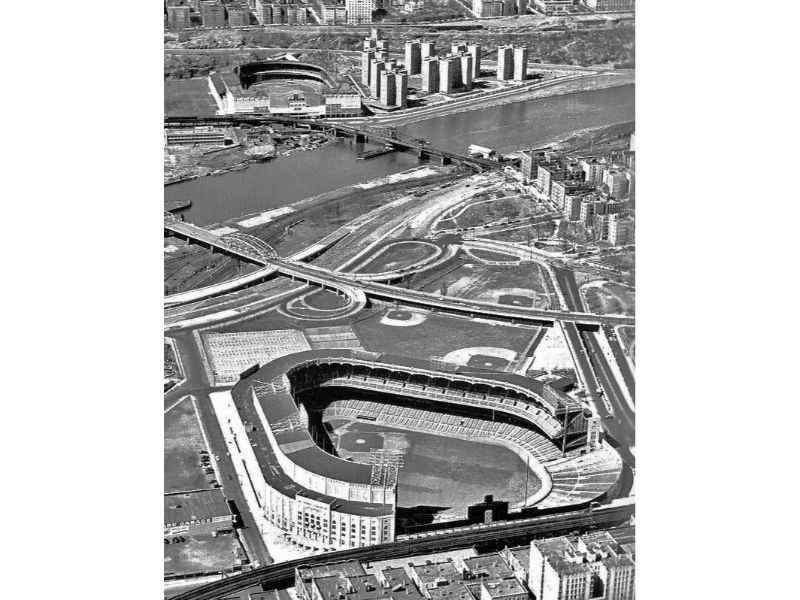
Old Yankee Stadium was the home of the New York Yankees (formerly the Baltimore Orioles) from 1923 to 2008.

Old Yankee Stadium

It was located at 161st Street and River Avenue in the Bronx, across 161st Street from the new Yankee Stadium.

Old Yankee Stadium Gate 4 Waiting to Enter

The stadium was renovated extensively during the late 1970s.  Gate 2, however, was one of the few sections to retain much of its original appearance.  In 2010 an effort was underway to save Gate 2 from demolition.  Unfortunately, that effort failed and Gate 2, along with the rest of the stadium, met the wrecking ball.

Old Yankee Stadium Gate 2

Arriving at old Yankee Stadium via the 161st Street Subway station provided fans a terrific panoramic view of the back of the stadium.

Old Yankee Stadium as seen from the Outbound 161st Subway Station

The inside of old Yankee Stadium seemed cavernous, especially the view from the upper deck.

Batting Practice at Old Yankee Stadium as seen from Right Field Upper Deck

The color scheme of old Yankee  Stadium was blue, blue, and more blue.

Yankee Blue at Old Yankee Stadium

Monument Park, located on what once  was the expansive back portion of old Yankee Stadium’s center field, was moved to new Yankee Stadium.

Monument Park and Yankees Bullpen at Old Yankee Stadium

The Yankees bullpen was located in left-center field to the left of a portion of the old center-field bleachers known as “the black.”  The bleachers had been painted black to facilitate the “batter’s eye,” helping batters at home plate pick up the pitch being thrown at them.

Old Yankee Stadium Home Team Bullpen

The visiting team bullpen was located beyond left field, to the left of monument park.

Old Yankee Stadium Visitor's Bullpen - Orioles' Steve Trachsel Pitching Under Watchful Eye of Pitching Coach Leo Mazzone

The foul poles were covered in layers of yellow paint.

Old Yankee Stadium Right Field and Left Field Foul Poles

Passengers riding the train past the 161st Street station had a quick view  inside  the stadium – at no charge other than the cost of a subway token.

A Second's Worth of Free Baseball from the Train at Old Yankee Stadium

The seating  bowl rose high above the playing field, requiring that those sitting at the top of the stadium have both good eyesight and a strong stomach.

A Sense of Vertigo Old Yankee Stadium Style

The light stanchions of old Yankee Stadium were located flush along the top of the roof.

Old Yankee Stadium Lights Above Left Field

The white plastic tarp placed during rain delays at old Yankee Stadium sat in contrast to the blue, blue seats of the upper and lower seating bowl.

Rain Delay at Old Yankee Stadium

As proof that nothing is sacred and nothing lasts forever, in 2006, the Yankees broke ground on a new Yankee Stadium to be located across the street from old Yankee Stadium.

New Yankee Stadium Under Construction as seen from Behind Left Field Grandstand Circa 2007

During the 2008 season, new Yankee Stadium could be seen from inside old Yankee Stadium by fans sitting in right field.

Old Yankee Stadium with New Yankee Stadium Under Construction Circa April 2008

Old Yankee Stadium Center Field with New Yankee Stadium in Background Circa July 2008

The original frieze of old Yankee Stadium was replicated in new Yankee Stadium.

Post-1978 old Yankee Stadium Frieze with New Yankee Stadium Frieze in Background

The site  of old Yankee Stadium is now a public park known as “Heritage Field.”

Old Yankee Stadium Site at Heritage Field

For baseball fans  accustomed to watching Yankees games either in person or on television, the Bronx County Courthouse is a familiar site, having once loomed over right center field at old Yankee Stadium.

Old Yankee Stadium Site with Bronx County Courthouse in Background

The Giant 138 foot Louisville Slugger Bat (which serves as an exhaust pipe for the subway) remains in its original location outside the former site of old Yankee Stadium.

The Giant Louisville Slugger Bat from Old Yankee Stadium Remains

The playing field at old Yankee Stadium has been recreated with the infield in its original spot.   Heritage Field includes a total of three ball fields.  In what was once center field is a section of the frieze from old Yankee Stadium.

View of Old Yankee Stadium Site from Behind Home Plate with Section of Frieze in Background

The sidewalk surrounding Heritage Field includes markers recognizing significant moments in the history of old Yankee Stadium.

Marker Honoring One of the Significant Moments at Old Yankee Stadium

The old Yankee Stadium site is visible from within new Yankee Stadium from the escalator above the Hall of Legends.

Old Yankee Stadium Site as seen from New Yankee Stadium Hall of Legends

The site of home plate is visible  between the Hall of Legends columns.

Site of Old Yankee Stadium Home Plate as seen from Hall of Legends

The giant Louisville Slugger bat is visible  as well.

Old Yankee Stadium Bat as seen from Hall of Legends

At the top of the stadium along the first base line, the old Yankee Stadium site and Heritage Field are visible behind the last row of seats.

Old Yankee Stadium Site as seen through New Yankee Stadium Upper Deck

Having now visited the old Yankee Stadium site and seen a game in the new stadium, I still can’t believe they tore down old Yankee Stadium.  Sure, future generations of fans will be able to stand where the stadium once stood and perhaps throw around a baseball.  This certainly is better than having turned the site  into a parking lot.  But, it is little solace for those of us who wished the city and the team  had found a way to build new Yankee Stadium in place of the old, keeping the playing field the same.  In the end, old Yankee Stadium is now just another lost ballpark and the “House that Ruth Built” is now nothing more than a memory.

Old Yankee Stadium Site as seen from Top of New Yankee Stadium First Base Side


Tags: , , , , , , , , , , , ,
Posted in New York ballparks, Yankee Stadium | Comments (0)

Shea Stadium’s Ghost in the Shadow of Citi Field

October 17th, 2011
by Byron Bennett

Shea Stadium was home to the New York Mets from 1964 to 2008.

Approaching Shea Stadium from the No. 7 Train

Located in Flushing, New York, adjacent to the former grounds of the 1964 Worlds Fair, Shea was the second of the so-called “cookie cutter,” multi purpose stadiums, following RFK stadium (formerly D.C. Stadium), which opened in 1961.

Shea Stadium Gate E Located Near Right Field

Stadium access by subway was behind the stadium via stairs to the Willets Point subway stop.

Shea Stadium Beyond Stairs To Willets Point Subway Station

The stadium facade was for the most part a series of walking ramps from the ground floor to the upper reaches of the stadium.

Shea Stadium Exterior

Out beyond center field was a large parking lot which, thankfully, was not visible from lower seating bowl.

Shea Stadium on a Beautiful Summer's Afternoon

Prior to construction beginning on Citi Field, the area beyond center field seemed almost bucolic.

Shea Stadium Outfield Pre Citi Field Construction

Shea Stadium’s home run apple, which rose out of an upside down top hat, sat just beyond right-center field.

Shea Stadium's Home Run Apple

The right-field scoreboard included a lighted-neon panoramic outline of the New York City skyline.

Shea Stadium Right Field Scoreboard

On a clear, summer afternoon, Shea Stadium was a great place to watch a ballgame.

Shea Stadium With Pedro Martinez on the Mound

The distance from home plate to dead center field was 410 feet, one of the longest in the majors.

Shea Stadium - the View from Center Field

The view from inside the stadium seating area changed dramatically when construction began on Citi Field.

Shea Stadium Right Field Scoreboard with Citi Field In Background

The juxtaposition of the two stadiums provided plenty of interesting camera angles for capturing the past and the future of baseball in Flushing, NY.

View of Citi Field from Shea Stadium Section 27

From 2006 until its closing in 2008, every visit to Shea Stadium was a reminder that the ballpark’s days were numbered.

Looking Through Shea Stadium Ramp toward Citi Field

It seemed a shame that the team couldn’t have found a way to incorporate part of the old stadium structure in the new ballpark.

Can't We Both Just Get Along? Shea and Citi Field Side by Side

Still, Citi Field does pay homage to its predecessor in several ways.  The former site of Shea Stadium is marked in parking lot B of Citi Field.

Shea Stadium Home Plate Marker

Arrive several hours before game time and you should have no problem running the bases of old Shea Stadium.

Shea Stadium Home Plate Marker Looking Toward PItchers Mound

In addition to home plate and the pitcher’s mound, each base is denoted with a bronze marker.  The figurine etched into the marker denotes the neon ballplayers that once graced the gate entrances of Shea Stadium.

Shea Stadium First Base Marker

The home run apple was moved from its former location beyond Shea Stadium’s right-center field to Citi Field’s front entrance just beyond the Willets Point subway stop.

Shea Stadium Home Run Apple Adorns Citi Field Parking Lot

The NYC Neon skyline was removed from the top of Shea Stadium’s right-field scoreboard and placed atop Citi Field’s Shake Shack located beyond center field.

NYC Skyline Removed From Shea's Old Right Field Scoreboard

Also located beyond the outfield is the Shea bridge, a pedestrian walkway honoring William Shea.

Shea Bridge Relocated to Citi Field

A plaque on the side of the bridge pays homage to Mr. Shea, the namesake of the Mets’ former ballpark.

Plaque Attached to Shea Bridge at Citi Field

Although Shea Stadium has joined the ever-growing list of lost ballparks, its memory lives on at the Mets’ new home, Citi Field.  It’s ghost now sits in Citi Field’s shadow, more specifically, parking lot B.

Tags: , , , , , , , , , , , , , ,
Posted in New York ballparks, Shea Stadium | Comments (0)

Hilltop Park And the Church of Baseball

December 17th, 2010
by Byron Bennett

Perched on a hill overlooking the Hudson River at the southwest corner of Broadway and 168th Street in Washington Heights was Hilltop Park, the original home ball field of the New York Yankees (known then as the Highlanders).

Entrance to Hilltop Park (Library of Congress Prints and Photographs Division, Washington, D.C.)

The third base grandstand, which once ran parallel to Fort Washington Avenue, is shown in the picture below.

Doc White of the Chicago White Sox at Hilltop Park (Library of Congress Prints and Photographs Division, Washington, D.C.)

The first base grandstand, depicted in the photograph below, ran parallel to 165th Street.

Kid Gleason of the Chicago White Sox at Hilltop Park (Library of Congress Prints and Photographs Division, Washington, D.C.)

The New York Presbyterian/Columbia Medical Center, erected in the 1920′s, now engulfs the entire site.  Nothing remains of the old ballpark.

New York Presbyterian/Columbia Medical Center, Former Site of Hilltop Park

In a courtyard just off Fort Washington Avenue, between 165th and 168th Streets, is a bronze plaque marking the former location of home plate.

Former Site of Hilltop Park's Home Plate

The New York Yankees donated the plaque to the hospital and unveiled it in 1993 during a dedication attended by former Highlanders pitcher Chet Hoff, who was then 102 years old.  Mr. Hoff went on to become the oldest living ex-major-leaguer ever, before his death five years later.

Bronze Plaque Honoring Former Location of Hilltop Park

This famous picture (below) of Ty Cobb sliding into third base, and Chicago White Sox third baseman Jimmy Austin, was taken at Hilltop Park.

Ty Cobb Sliding Into Third Base at Hilltop Park (photo image courtesy of Mike's Chicago White Sox website at www.freewebs.com/karamaxjoe/jimmyaustinjersey.htm

The location of third base, where this picture was taken, is inside the Presbyterian Building shown in the photo below, just 90 feet beyond where the home plate marker resides.

The Presbyterian Building, Former Site of Third Base at Hilltop Park

The medical center’s chapel – the Pauline A. Hartford Memorial Chapel – is  constructed on what once was Hilltop Park’s right field.  It is, literally, a true “church of baseball.”

Pauline A Hartford Memorial Chapel (With Rose Window Seen Through Trees), Located in Former Site of Hilltop Park Right Field

UPDATE – AUGUST 2011

The courtyard off Fort Washington Street currently is under construction and the bronze plaque honoring the former location of home plate has been removed.

Sign On Fort Washington Street Announcing Construction In Courtyard

As such, the courtyard is closed off to visitors.

Courtyard as seen through chain link fence


Although the actual ballpark is long gone, the distinctive, attached apartment buildings at the corner of 168th and Broadway remain from the time of Hilltop Park.  Those buildings appear in the photograph below.

Players Practicing at Hilltop Park (Library of Congress Prints and Photographs Division, Washington, D.C.)

The photograph below depicts those same buildings, along with a Victorian style stone building, long gone, that sat along Broadway, just south of 168th Street.

New York Highlander Curt Coleman at Hilltop Park (Library of Congress Prints and Photographs Division, Washington, D.C.)

The buildings  as they appear today facing 168th Street, at the intersection of 168th and Broadway.

Apartments Facing 168th Street

The apartment buildings house offices, a restaurant, and Melbran Pharmacy.

Melbran Pharmacy at the Corner of 168th and Broadway

The former ballpark site is easily accessible via the 168th Street Subway Station.

Subway Stop at 168th and Broadway

The lost ballpark located up Broadway, 120 blocks north on Times Square, is worth a visit for any true New York Yankees fan and is only a two mile drive from the Yankees current home at 161st  Street in the Bronx.  Just take the Macombs Dam Bridge across the Harlem River to west 155th Street to Broadway, and head north to 165th  Street. Or, take the subway to 168th Street Station.

Tags: , , , , , , , , , , , , , , , , ,
Posted in Hilltop Park, New York ballparks | Comments (1)

An Expedition to Pittsburgh’s Exposition Park(s)

December 15th, 2010
by Byron Bennett

Long before PNC Park, Three Rivers Stadium, and Forbes Field, Pittsburgh’s professional baseball teams played at a place known as Exposition Park.  In truth, there actually were three different incarnations of Exposition Park located along the banks of the Allegheny River.  The third, and most well documented, being the last of the three.

Exposition Park Pittsburgh, August 1904 (Geo. R. Lawrence Co., Library of Congress, Prints and Photographs Division, Washington, D.C.)

In the above photograph, North Side’s Monument Hill is visible in the background (now Community College of Allegheny County).

Pittsburgh's Exposition Park (postcard image courtesy of Wikimedia Commons, postcard publisher unknown)

As is evident in the above postcard, Exposition Park once sat along the Allegheny River, across from downtown Pittsburgh, just east of the Pirates current home, PNC Park.  The picture below of the Bill Mazeroski Statute located outside the Right Field Gate, includes some of the same buildings across the Allegheny River that appear in the postcard above, most notably the Marriott Renaissance Hotel, with its distinctive upside down u-shaped breezeway, to the left in the photograph.

Bill Mazeroski Statue Located Outside PNC Park Just West of Exposition Park's Former Site

Because the area along the Allegheny River where the ballpark once stood flooded several times, and has been dredged and widened, the exact location of Exposition Park is difficult to determine.

Former Site of Exposition Park as Seen From PNC Park

However, along the banks of the river, just east of Interstate 279 and the Fort Duquesne Bridge, a plaque constructed by the Pennsylvania State Historical and Museum Society honors Exposition Park.

Pennsylvania State Historical Plaque Honoring Exposition Park

The plaque also notes that in October 1903, the very first World Series – between the Pittsburgh Pirates and Boston Americans – was played there.

Pennsylvania State Historical Marker Honoring Exposition Park and the First World Series

The former site of two other Pittsburgh ballparks reside in the area near Exposition Park.  Three Rivers Stadium sat just to the north and west of Exposition Park.  The picture below, taken just north of Exposition Park’s former site facing in the direction Heinz Field, shows the approximate location of Three Rivers Stadium, which is now, largely, a parking lot.

Former Site of Three Rivers Stadium (Just Beyond Interstate 279) From Vantage Point of Exposition Park

Recreation Park, where Pittsburgh played its home games from 1887 to 1890, prior to moving into Exposition Park’s third incarnation in 1891, sat just north of Exposition Park.  A Pennsylvania State historical marker placed along North Shore Drive just west of Heinz Field pays homage to Recreation Park.  The plaque notes that the ballpark resided just “a few blocks NW of here.”

Plaque Honoring Recreation Park

The Pennsylvania State historical marker likewise notes that the first professional football game was played at Recreation Park in 1892, one year after the Pirates left for Exposition Park.

Pennsylvania State Historical Marker Noting Recreation Park's Significance to the History of Professional Football

Pennsylvania State Historical Marker Noting Recreation Park's Significance to the History of Professional Football

The Pirates current home, PNC Park, resides just a long fly ball from the former site of Exposition Park.

Former Site of Exposition Park With PNC Park as a Backdrop

With so many lost ballparks located near the Pirates current home, anyone who cares at all about the history of the game should be sure to take a stroll just west of PNC Park and visit the former sites not only of Exposition Park, but Recreation Park and Three Rivers Stadium as well.

Tags: , , , , , , , , , , , , , , , , ,
Posted in Exposition Park, Pennsylvania ballparks | Comments (1)

Wickers Stadium In Key West, Florida

December 14th, 2010
by Byron Bennett

Professional baseball was once played in the southernmost point of the United States at a place known as Wickers Stadium (also known as Wickers Field) in Key West, Florida.

Former Site of Wickers Stadium in Key West, Florida

In 1952, the Key West Conchs played a portion of their Florida International League games there.  In 1969, it was the Key West Padres (managed by Don Zimmer) and, during the early to mid 1970s, it was the Key West Sun Caps, Key West Conchs, and Key West Cubs, all of the Forida State League, that played their home games at Wickers Stadium.

Former Location of Wicker Field's Third Base Grandstand Along Flagler Avenue

Former Location of Wickers Stadium Third Base Grandstand Along Flagler Avenue

Thanks to former Key West Resident Don, we now have a picture of Wickers Stadium to post.

Wicker Stadium (Monroe County Florida Public Library Flicker File - Photo taken by Property Appraiser's office c1970; N. Roosevelt Blvd; Wicker's Field)

According to locals I spoke to at the site, the ballpark itself was of modest size, holding no more than a couple thousand fans.  They also confirmed for me the approximate location of the playing field.  I believe the grandstand pictured above was located near the corner of FlaglerAvenue and 14th Street.

Left Field was located at the intersection of President Kennedy Drive and Flagler Avenue in Key West, Florida.

Corner of Kennedy and Flagler, Former Home of Wickers Stadium

Wickers Stadium is gone now, but the area remains a public park known officially as the Wickers Sports Complex.  The complex houses both a youth football field and a softball diamond.  Along what was once the third base grandstand now sits the George Mira Football Field.

George Mira Football Field at Wickers Sports Complex

George Mira, who was born in Key West, played quarterback for the University of Miami, and later played professional football for the San Francisco 49ers, the Philadelphia Eagles, and the Miami Dolphins.

Former Site of Wickers Stadium Left Field

The football field today is used mainly for youth football, although, at the time of Wickers Stadium, high school teams used to play at there on a different configuration  of the field (north/south).

Key West Junior Football League at Wickers Sports Complex

In the area that was once right and center field is the DeWitt E. Roberts Softball Diamond.

DeWitt E. Roberts Softball Diamond at Wickers Sports Complex, Key West, Florida

The infield sits in the approximate location of Wicker Stadium’s right field.

Former Right Field of Wickers Stadium

Although Wickers Stadium has been demolished, a portion does remain, namely, a 10 foot tall concrete and cinderblock wall that once surrounded a portion of the stadium.

Original Wickers Stadium Outfield Wall

The wall is located beyond the softball diamond’s center field fence.

Wicker Stadium Outfield Wall With Scoreboard In Background

Wicker Stadium Outfield Wall With Scoreboard In Background

The area is accessible through a gate in the current center field fence.

Entrance to Wicker Stadium Outfield Wall Through Center Field Fence

Entrance to Wicker Stadium Outfield Wall Through Center Field Fence

Who knows how many Conchs, Padres, Caps, and Cubs luminaries once might have sat on this now-forlorn bench.

Time Has Not Been Kind To This Once Proud Park Bench From Old Wickers Stadium

One additional vestige of Wickers Stadium remains across Flagler Avenue – a vintage sign advertising “Stadium Apartments” one block north of the former stadium on 14th Street.

Vintage Sign Across Flagler Avenue From Wickers Sports Complex Advertising Stadium Apartments

Although Wickers Stadium is now just another lost ballpark, its former site remains a place where one can still hear the crack of the bat (okay, the ping of the bat) at the DeWitt E. Reynolds softball field.  So, if you ever find yourself in the southernmost point of the United States, longing for a taste of the National Pastime’s “pastime,”  pay a visit to the Wickers Sports Complex.  When there, be sure to stop by the old outfield wall located beyond center field.  It’s part of the game’s history, although, I do not suggest anyone sit on the park bench.

Tags: , , , , , , , , , , , , , , ,
Posted in Florida Ballparks, Wickers Stadium | Comments (17)

The Vet

July 24th, 2010
by Byron Bennett

Veterans Stadium in Philadelphia was home to the National League Phillies from 1971 until 2003.

Phillies at Veterans Stadium (Philadelphia Post Card Co./photo by Frank Burd)

The stadium was part of a larger sports complex located south of downtown Philadelphia adjacent to Interstate 95 at Broad Street.

Stadium Complex (Art Color Card Distributors)

The only sports venue still standing in the postcard pictured above is the Spectrum, which was once home to Philadelphia’s hockey and basketball teams.

Veterans Stadium Visible from I-95 Heading North

The “Vet,” as it also was known, dominated the landscape along Interstate 95 heading north into Philadelphia.

Veterans Stadium along Pattison Avenue with Broad Street Subway Stop in Forground

Veterans Stadium was dedicated on April 4, 1971, to the “brave men and women of Philadelphia who served in defense of their country.”

Philadelphia Veterans Stadium Bronze Plaque Posted on Pillar Outside Stadium

Like many of the so called “cookie-cutter” stadiums constructed in the 1960s and 1970s, Veterans Stadium’s playing field was mainly artificial turf.  During summer days like the one in the picture below, it was not uncommon for the field temperature to reach 120 degrees.

View of Veterans Stadium from Center Field

A flattened version of Philadelphia’s famed Liberty Bell stood high above the stadium’s the center field seats.

Veterans Stadium Liberty Bell

Veterans Stadium section signs continued the Liberty Bell theme.

Veterans Stadium Sections Signage

The Vet’s original yellow and red plastic seats were replaced during the 1990s with blue plastic seats, making the seating area more uniform, if less colorful.

Giants Players In Pre-game Stretch on Veterans Stadium's Light Green Turf

One advantage of the artificial turf, as opposed to natural grass,  was it allowed fans the opportunity to sit on the field during firework night without any fear of damaging the playing field.

Baseball Fans Cover Veterans Stadium Outfield in Anticipation of Fourth of July Fireworks Display

The Vet’s linoleum floor on the concourse behind the 200 level looked more like something out of a high school cafeteria than a professional baseball venue.

Veteran Stadium's Red and White Linoleum Tile

In an effort to attract more fans, the Phillies added several family-friendly activities in the concourse, including speed pitch.  Such additions, however, could not hide the fact that the Vet was not designed with such activities in mind – an approach the designers of the new ballpark were certain to change.

Veterans Stadium Speed Pitch

As with just about every other multi-purpose ballpark, the Vets days were numbered, both literally and figuratively.

Only 644 Days Left Until the Death of Veterans Stadium

During the final two seasons of Veterans Stadium, the new ballpark, later named Citizens Bank Park, could be seen rising in a parking lot east of the Vet.

New Scoreboard Under Construction as Seen from Veterans Stadium

Although not visible from inside the ballpark’s seating bowl, construction of Citizens Bank Park was easily monitored standing along the outer concourse.

New Light Stanchions as Seen from Veterans Stadium

In late winter 2003 and early spring 2004, the Phillies and the City of Philadelphia put finishing touches on the new ballpark, while the Vet stat silently by, awaiting demolition.

The New and the Old

The end came quickly for Veterans Stadium.  During the summer of 2004, fans were treated with live action views of the stadium’s demolition site as city workers carted away stadium debris.

Veterans Stadium Lies in Ruins, As seen From the Upper Deck of Citizens Bank park

Although the former site of Veterans Stadium is now a parking lot, the Phillies ballclub and City of Philadelphia have included several markers and monuments recognizing the lost ballpark.  The entrance to parking area, Lot T, is a good place to start.

Lot T - Former Site of Veterans Stadium

A state historical marker pay tribute to significant milestones of Veterans Stadium.

Veterans Stadium State Historical Marker

The Phillies also relocated the Veterans Stadium dedication plaque to a garden on Pattison Avenue.

Veterans Stadium Dedication Plaque Relocated Along Pattison Avenue

Recognizing that the City of Philadelphia had dedicated Veterans Stadium in honor of Philadelphia’s veterans, the Phillies erected a new monument at the former site of Veterans Stadium as an “everlasting memorial to veterans who have defended America’s freedom since its inception in Philadelphia on July 4, 1776. ”

Memorial to Philadelphia's Veterans

The Phillies also restored four sports-themed statutes that once stood outside the entrances to Veterans Stadium.  Designed and produced by Joe Brown, a Philadelphia native, the statues now ring the parking lot that sits atop the Vet’s former site.

Statutes of Ballplayers Produced in 1976 by Joe Brown

The statute of a player sliding into base sits along Pattison Avenue, while the statue of a batter sits across the parking lot on South 1oth Street.

Joe Brown's Batter Statute

The Phillies also relocated between Citizens Bank Park and the site of Veterans Stadium a statute of former Philadelphia Athletics manager and owner Connie Mack.  The statue dates to the 1950s and originally was located on Lehigh Avenue in a park across from Connie Mack Stadium.

Connie Mack Statute Sandwiched Alongside Porta-potties

Parking Lot U, Area 3, marks the spot of the Veterans Stadium infield.

Parking Area, Lot U

A granite marker sits in the former location of home plate .

No Place Like Home

The marker is located in a driving lane as opposed to a parking space.

Veterans Stadium Home Plate with Spectrum in Background

Veterans Stadium Home Plate with Citizens Bank Park in Background

The same is true for the pitchers mound, now flattened, which also resides in a Lot U driving lane.

Location of Veterans Stadium Pitching Rubber

The Phillies have marked the former location of each bases as well.

Location of Veterans Stadium First Base

The granite marker for third base provides baseball fans the unique opportunity of parking their cars atop the spot where Hall of Famer Mike Schmidt once roamed the hot corner.  Let me just say what a thrill it was to park my car there.  A tip for those who want to experience the same thrill – arrive early.

Third Base Parking Space

The one vestige of Veterans Stadium that remains, still in its original location, is an electronic Phillies sign visible from I-76 (the Schuylkill Expressway) that resides near the entrance to parking Lots W and X.

Veterans Stadium-Era Phillies Sign Still Standing

That sign likewise is visible from inside Citizens Bank Park, out beyond center field.

Citizens Bank Park with Veterans Stadium Sign Visible Beyond Center Field

The many tributes and monuments to Veterans Stadium are well worth a stop for baseball fans visiting Citizens Bank Park.  The Vet may be long gone, but, thanks to the Phillies and the City of Philadelphia, she clearly has not been forgotten.

Tags: , , , , , , , , , , , , , , , , , ,
Posted in Pennsylvania ballparks, Veterans Stadium | Comments (0)

Comiskey Park The First

June 28th, 2010
by Byron Bennett

Comiskey Park, located on Chicago’s South Side, was home to the Chicago White Sox for 80 years from 1910 to 1990.

White Sox Park, Chicago, Illinois (publisher unknown)

The White Sox’s ballpark predated famed Wrigley Field (Weeghman Field) by  four years.  The Cubs did not begin play at Wrigley until 1916.

Chicago's Famed South and North Side Ballparks (Joboul Aero Distributing/Colourpicture Publishers)

The picture below shows the single-deck seating along first base.  An upper deck was added to this area in the late 1920s.

Comiskey Park Circa 1910-1925 (Library of Congress Prints and Photographs Division Washington, D.C.)

South Side Park, home to the American League White Sox from 1901 until mid-season 1910, was located just four blocks south of Comiskey Field.

Cubs vs. White Sox, City Championship series, Chicago, Oct. 9, '09, South Side Park (Library of Congress Prints and Photographs Division Washington, D.C.)

Demolition of Comiskey Park took place during the 1991 inaugural season of new Comiskey Park.  As is true with many former ballparks, the former site of old Comiskey Park serves as parking for the new ballpark.  In the photograph below, taken in 2003, the parking lot in the foreground is the former site of Comiskey Park.  The parking garage attached to the right of the stadium sits in the footprint of old Comiskey Park’s first base grandstand.

Old Comiskey Park Site Turned Parking Lot Adjacent To New Comiskey Park (circa 2000)

Another view of the former site of old Comiskey Park looking west, taken from Interstate 94 in 2001.  Notice the new stadium’s large upperdeck.  A significant portion of that upperdeck, including the upper 10 rows of seating, were removed during renovation of the ballpark in the mid-2000s.

New Comiskey Park and Old Comiskey Park Site to the Right as Seen From Interstate (circa 2003)

The front entrance of the new ballpark (for team officials and employees) sits just a short fly ball from the site of old Comiskey Park.

Entrance to Now U.S. Cellular Field (circa 2003)

The following shot of the employee entrance to the the new ballpark was taken from the roof of the parking garage that sits in the footprint of old Comiskey Park.

View of Entrance To New Ballpark Taken From Parking Garage That Sits In Footprint of Old Comiskey Park (2003)

When it opened in 1991, the new ballpark also was named Comiskey Park, honoring the memory of the old ballpark.  That changed in 2003 when the White Sox sold naming rights to the stadium to U.S. Cellular Field.

Retro Scoreboard at New Comiskey Park (circa 2000) Before Name Change

In the parking lot just north of U.S. Cellular Field is a granite marker noting the former location of Comiskey Park’s home plate.

Home Plate Marker of Old Comiskey Park

The parking lot includes a recreated batters box and markings of the left and right field foul lines.

Young Fans Block My View of Re-created Old Comiskey Batters Box

Although nothing remains of old Comiskey Park, the White Sox’s decision to demarcate the former site of home plate allows fans of the game to visualize a small portion of the lost ballpark.   Luckily for fans, the White Sox were careful to construct the lot so that parking is not allowed atop the former home plate.  The same is not true for the rest of the field and Season Ticket holders with access to Lot B, who get to the game early, can park their car on former infield, atop the pitchers mound, in the outfield, or maybe even where Shoeless Joe Jackson once roamed right field.

Tags: , , , , ,
Posted in Comiskey Park, Illinois Ballparks | Comments (1)

The Allegheny, Monongahela, and Ohio Rivers Stadium

June 25th, 2010
by Byron Bennett

Three Rivers Stadium, home to the Pittsburgh Pirates from 1970 through 2000, was located in the North Shore section of Pittsburgh.

Three Rivers Stadium Aerial View (Gold Star Photography/Norman W. Schumm)

The multipurpose stadium was nestled along the Allegheny River, adjacent to where that river converges with the Monongahela River to form the Ohio River, hence the stadium’s name.

Pittsburgh's Skyline Across the Allegheny River Looking South Beyond Three Rivers Stadium's Outfield Wall

It is hard to believe that the Pirates would have abandoned historic Forbes Field for the generic and sterile confines of Three Rivers, however, such was progress, 1970′s-style.

Three Rivers Stadium Playing Field

Tarp Covers Three Rivers Stadium's Infield During Rain Delay

The seating capacity and the lack of demand for tickets led Pirate officials to close off portions of the outfield upper deck seating area.

Closed Upper Deck Seating Area Included Tribute to Pittsburgh's Negro League Champions

Still, regardless of its architectural merits, Three Rivers Stadium hosted major league baseball for over 30 seasons and, with its demolition, a considerable amount of baseball history went with it.

Three Rivers Stadium Upper Deck

The site of two World Series, many great Pittsburgh players called Three Rivers Stadium their home.

The Three Rivers Third Base Side and Left Field Corner

Ultimately, progress made a dramatic U-turn and in 2001, the Pirates inaugurated PNC Park, constructed just four blocks east of Three Rivers Stadium.

Looking West From PNC Park toward Former Site of Three Rivers Stadium circa 2003

PNC Park With Heinz Field And Former Site of Three Rivers Stadium In Background

Today, the former site of Three Rivers Stadium is, like many other recently-lost ballparks, a parking lot.

Former Site of Three Rivers Stadium (Shown As A Parking Lot) Adjacent to Heinz Field Circa 2009

Construction of the North Shore Entertainment Complex currently is underway on the former site of Three Rivers Stadium.   The picture below shows the area formerly occupied by the right field corner/seating area of Three River Stadium.

Sign Announcing Construction of North Shore Entertainment Complex at Former Site of Three Rivers Stadium

Eventually, the area will house a two story,  22,000 square foot for both indoor and outdoor concerts.

Former Site of Three River Stadium Center Field

Former Site of Three River Stadium Center Field Looking Southeast

The seating area along left field/third base remains a parking lot, for the moment, at least.  The approximate location of left field sits on West Robinson Street, just east of Interstate 279.

Approximate Location of Three Rivers Stadium Left Field Corner Looking Toward Direction of Home Plate

Approximate Location of Three Rivers Stadium Left Field Corner Looking Toward Home Plate

A two-story, concrete marker for Gate D is the only portion of Three Rivers Stadium still standing.   It is located adjacent to Heinz Field and the statute of Steelers’ founder Arthur Rooney.

Gate D Marker from Three Rivers Stadium

In 2006, the Pennsylvania Historical and Museum Commission erected a plaque next to the Gate D marker commemorating Three Rivers Stadium.

Three Rivers Stadium Historical Plaque With Heinz Field in Background

The plaque states:

Three Rivers Stadium

Opened on July 16, 1970.  Home to the Pirates, who won two World Series, and the Steelers, who won four Super Bowl Championships, creating “Pittsburgh’s City of Champions” identity.  It was the site of Roberto Clemente’s 3,000th hit, September 30, 1972 and Franco Harris’s legendary “Immaculate Reception,” December 23, 1972.  A multi-use facility, it also hosted many concerts and special events prior to its demolition on February 11, 2001.

Three Rivers Stadium Pennsylvania State Historical Marker

A stop at Gate D to visit the site of yet another lost ballpark is certainly worth the trip next time you find yourself four blocks east at PNC park in Pittsburgh.

Tags: , , , , , , , ,
Posted in Pennsylvania ballparks, Three Rivers Stadium | Comments (0)

Le Stade Olympique

May 16th, 2010
by Byron Bennett

Built to host the 1976 Summer Olympics, Le Stade Olympique, or Olympic Stadium, was the home of the Montreal Expos from 1977 to 2003.

Le Stade Olympique (Les Messageries de Presse Benjamin Montreal Enr., photo byMalak)

Slated to be the first major league stadium with a retractable roof, problems with construction delayed completion of the roof such that a fully-functioning retractable roof was not operational until 1988.   Continued problems with the building resulted in the installation of a new roof that did not retract. The cables that once lifted the fabric roof into the stadium’s tower are visible in the picture below.

The Roof and Cabling of Olympic Stadium

Le Plaque of Stade Olympique

With French being Montreal’s official language, a visit to Olympic Stadium was as much a trip to the ballgame as it was a lesson in French.

Ticket Stub En Francais

Because the stadium was attached to one of Montreal’s subway stations, it was possible to travel to and from the game without ever seeing the outdoors.  With the roof closed, the stadium’s cavernous seating bowl was exceptionally dark in spots, with shadows throughout much of the seating area under the upperdeck.

Batting Practice at Stade Olympique

The neon-green plastic grass seemed almost to glow against the dark, shadowy background.

The Game Was Still the Same

Low attendance was almost always an issue in Montreal and the day these pictures were taken there were perhaps 3,000 fans in the seats, even less during batting practice.

Third Base Lower Bowl and Upper Deck

With the closed roof and its lights arranged along the perimeter of the roof opening, the stadium had a bit of a Close-Encounters-Of-The-Third-Kind vibe.  Perhaps this was intentional, as the movie opened the same year the Expos began play there.

Richard Dreyfuss Taking A Few Swings in the Batting Cage

Unlike the tag line for the movie, however, fans attending Expos games felt very much alone.

We Are Not Alone, But Just Barely

In addition to the great Canadian Beer, Molson, Stade Olympique offered uniquely Canadian fare such as Moozoo – a “frappe” drink made of fruit and yogurt.

Moozoo Anyone?

The seats at Olympic Stadium were distinctive to say the least.   Their modern design gave the stadium even more of a close-encounters feel.  When cheering for the home team, fans would flip the seat bottoms into the seat tops, creating a truly deafening noise.

Funky Chairs - Very Loud When Slammed

The stadium’s concrete concourse had the feel of a large parking garage – without the cars.

Fans Fight Their Way Up the Ramp To The Upperdeck

Souvenir stands offered very little in the way of baseball memorabilia, presumably because the Expos, uncertain just how long they were going to last in Montreal, did not want to keep too much stock on hand.

Youppi Here, Get Your Youppi Here

Refreshment stands included menus in both French and English.  The French word for hot dog? -  hot dog.   The French word for hamburger? – hamburger.

Bon Appetit et Bon Match

Fans sitting in right field corner had whole sections all to themselves.

Right Field Foul Poll

Olympic Stadium still stands today.  Although it has no major, full-time tenant, it does not appear to be in any danger of becoming another lost ballpark.   The Government of Montreal actively markets its use for events throughout the year, including such events as soccer and motocross.

Tags: , , , , , , , ,
Posted in Canadian ballparks, Olympic Stadium | Comments (1)

Meet the Old Busch

May 12th, 2010
by Byron Bennett

Opened in 1966, the former home of the St. Louis Cardinals originally was known as Civic Center Busch Memorial Stadium.

Civic Center and Gateway Arch (St. Louis Color Postcard Co./photo Art Grossman)

The Cardinals left their previous home, Sportsman Park, in June 1970, and inaugurated the new, multi-purpose stadium later that month.

Busch Stadium's Plaza of Champions, Covered in Snow

The stadium’s original playing surface was grass, which proved difficult to maintain in a multi-purpose setting.  Replaced with Astroturf in the 1970′s, grass returned to the stadium during mid-1990′s renovations.

Busch Stadium's Natural Playing Surface

The stadium’s architecture paid homage to the St. Louis Arch.

Busch Stadium Concrete Arches Inspired by St. Louis Arch

The St. Louis arch loomed over the stadium, however, the stadium’s circular, enclosed shape did not allow for any sweeping vistas of the arch.

Busch Stadium Arches and the St. Louis Arch

Additional changes made during the mid-1990′s renovations were removal of seats above center field and addition of a hand-operated scoreboard.

Busch Centerfield Scoreboard with Construction Crane in Background

The mid-1990′s renovations improved significantly the stadium’s baseball ambiance.

Busch Stadium Manual Scoreboard and Retired Numbers

Nothing says baseball like a stadium named after a beer company.

Busch Neon Light Above Centerfield Scoreboard

Although considered a “cookie-cutter” stadium, Busch Stadium had its share of majestic sight lines.

Busch At Twilight

With its large expanse of seating and playing field, the glow of night baseball at Busch Stadium was especially striking.

Busch Night Game

One benefit of the cookie cutter stadiums was they allowed fans the opportunity to view the playing field from every vantage point simply by walking the entire circumference of the upper deck – something that is no longer possible in any major league ballpark still in use.

Busch Stadium Upperdeck Walkway

The upper and lower seating bowl was a sea of red plastic, riser-mount seats.

Rows of Red Upperdeck Seats

In 2004, the Cardinals began construction of new ballpark to be partially located in a parking lot just south of Busch Stadium.

Parking Lot Southwest of Stadium - Now Site of New Busch Stadium

During the summer of 2005, the new stadium could be seen rising along side old Busch Stadium.

Old and New Busch Stadium as Seen From St. Louis Arch

Construction of the new stadium dominated the view from the outer concourse located behind right field.

Busch Stadium Upperdeck Pillars and New Stadium

A walk along that concourse during the summer of 2005 was bittersweet as it foretold the end of an era and the coming of another lost ballpark.

Where Have You Gone Mark McGwire?

Fans purchasing souvenirs had a view of the shape of things to come.

Busch Stadium Souvenir Stand With New Stadium in Background

The entrance to the New Busch Stadium under construction at the intersection of Clark Avenue and  Stadium Plaza provided a striking example of the architectural differences between the two ballparks.

Old Busch Meets New Busch

The new ballpark’s left field sits in place of old Busch Stadium’s right field/first base seating section.  An outline of a portion of Busch Stadium’s outer wall is still visible across Clark Avenue (which was added after the demolition of old Busch Stadium) which runs alongside the new stadium.  The following two photographs show the former site along Walnut Street prior to asphalt pavement for parking.

Former Site of Busch Stadium Left/Center Field

The Cardinals plan to turn this portion of the site into a “ballpark village” with retail and residential development.

Former Site of Busch Stadium

Old Busch Stadium is now just another lost ballpark.  Hopefully, the Cardinals, in developing their ballpark village, will find a way to pay homage to the former ballpark and demarcate precisely where the ballpark used to sit.

New Busch Stadium with Former Site of Old Busch Stadium Visible Beyond Centerfield

Tags: , , , , ,
Posted in Busch Stadium (II), Missouri ballparks | Comments (0)

Crosley Field and the Corner of Findlay and Western

May 9th, 2010
by Byron Bennett

The corner of Findlay Street and Western Avenue hosted professional baseball from 1884 until June 1970.  Home of the Cincinnati Reds, the earliest ballpark incarnation at that corner, League Park, lasted until 1900, when the grandstand was destroyed by fire.  Portions of League Park undamaged by the fire, mainly seating in right field (the former League Park grandstand before the field was repositioned), were incorporated into a second ballpark, known as the Palace of the Fans, which lasted until 1911.   The following three photographs show the demolition of the Palace of the Fans in preparation for construction of a new ballpark.

Wrecking the Palace of the Fans (Library of Congress Prints and Photographs Division Washington, D.C.)

In this second photograph, the building in the background is the Oliver Schlemmer Co. Plumbing, Heating & Power Work building.  The concrete pillars in the foreground are what is left of the old League Park grandstand, which was also used as Palace of the Fan’s right field pavilion.

Palace of the Fans Grandstand Comes Down (Library of Congress Prints and Photographs Division Washington, D.C.)

If only you could go back in time and grab some pieces of the old ballpark before they were discarded.

Palace of the Fans Demolition (Library of Congress Prints and Photographs Division Washington, D.C.)

The third ballpark constructed at the corner of Findlay and Western was Redland Field, later known as Crosley Field, in honor of the Reds’ owner Powel Crosley, Jr.

Crosley Field "Home of the Cincinnati Reds" (J. Louis Motz News Co.)

The right field bleachers and grandstand of Crosley Field were located at the corner of Findlay and Western.

Crosley Field First Base Grandstand and right field bleachers (Fasfoto, Inc.)

Western Avenue ran parallel to left and center field while Findlay Street ran along the first base line.  Only a few of the buildings shown in this aerial view of Crosley Field remain now at the former site.

Aerial View of Crosley Field (Bell Block News & Novelty Co.)

The buildings fronting Western Avenue are now long gone, having been demolished for construction of I-75.  The same is true for much of the buildings surrounding the grandstand.  They were demolished to make room for parking at Crosley Field.  One notable exception, however, is the building shown at the bottom left corner of the postcard.

Building Located Just Behind Third Base/Left Field Grandstand

The building, with its distinctive tall, brick smoke stack, is located just behind what was the third base/left field grandstand and remains from the time of Crosely Field.

Front of Building Facing York Street

A brick wall that ran from the front of the building east along York Street toward the corner of the left field grandstand remains as well.

Brick Wall that Attached to Grandstand

Dalton Avenue now intersects the site, running from left/center field, through right field, to the former first base grandstand.  Several buildings constructed on the site pay homage to Crosley Field.  Phillips Supply Company, located on Findlay Street, has an address of One Crosley Field Lane.

Phillips Supply Company- One Crosley Field Lane

In front of the building used to be six red-painted wooden seats which have since been replaced by plastic seats from Riverfront Stadium.

Crosley Field Seats in Front of Phillips Supply

Also on the former site is Hills Floral Products, located at 1130 Findlay, near where that street intersects with Western.

Hills Floral Supply Co. with Crosley Field Plaque

In front of the building, where the right field grandstand once stood, is a plaque honoring Crosley Field.  Inside the front lobby of the building are pictures and artifacts discussing Crosley’s history at the site.

Crosley Field Plaque

If you take the time to visit the Crosley Field site, be sure to stop at the playground located where the left field grandstand once stood.  They may not play professional baseball there anymore, but at least you can sit on a park bench (or ride a swing) in the same location where fans of the Cincinnati Reds once sat to watch the game of baseball being played.

Park Benches Where Grandstand Once Stood

Tags: , , , , , , , , ,
Posted in Crosley Field, Ohio ballparks | Comments (3)

The Cinergy of Riverfront Stadium

May 8th, 2010
by Byron Bennett

Riverfront Stadium was home to the Cincinnati Reds from June 1970, through the end of the 2002 season.

Riverfront Stadium in Cincinnati Ohio (Fas Foto, Inc.)

The stadium literally fronted the Ohio River, hence the name.

Riverfront Stadium Along the Ohio River as Seen from Kentucky (R.C. Holmes)

Riverfront Stadium was renamed Cinergy Field in 1996, thus replacing a terrific, classic stadium name with a terrifically awful stadium name.

Cinergy Field Sporting a Vinyl Banner

The Electric Glow of Cinergy Field

While Cinergy Field may have been a “cookie-cutter,” multi-use stadium, it still housed major league baseball, making it a special place.  The ground was still hallowed, even if it was neon-green.

The Green Plastic Grass of Cinergy Field

The stadium, although generic, still could seem majestic as the lights came up and the sun went down.

Cinergy Field With Scripps Building Looming Over Stadium

In 2001, a large portion of the stadium structure and seating bowl behind center field was removed to allow construction of what would become Great American Ballpark.

The Left Field Corner Before Making Room for Progress

The Center Field Wall and Stadium Structure Behind it Was the First to Go

As can be seen in the following photographs, the new ballpark rising behind center field dominated the landscape.

Left Field Corner with Stadium and Seating Removed

The same was true for right center field.

Great American Ballpark Under Construction Behind Cinergy Field

Construction of the new ballpark required that the outfield fence be moved in several feet.

Cinergy Field's Version of the Big Green Monster

Outside the ballpark, the old stadium seemed almost to merge with the new one under construction.

The Old and the New

Other aspects of the ballpark, however, remained as they had been for 30-plus years.

Well-Worn Seats

x

The Blue, Green, and Red Seats of Cinergy Field

The Last Rainout

Ironically, Great American Ballpark, built next to and atop Cinergy Field’s former site, pays tribute not to that stadium, but to Crosley Field.  “Crosley Terrace,” in front of the entrance to the new ballpark, includes statutes of former players.

Crosley Terrace at Great American Ballpark

The plaza also includes a recreation of Crosley Field’s famous left field berm (that later was extended to include center and right field as well), which ran over top city sewer lines that straddled the left field wall.

Crosley Field Berm Looking Toward What Was Deep Center Field

The Red’s Hall of Fame and Museum sits in the location of the former outfield.

Reds Hall of Fame and Museum Located on Hallowed Ground

Riverfront Stadium/Cinergy Field is now just another lost ballpark.  But for those who attended games there, it certainly is not forgotten, even if there is no plaque marking its former location .

Gone But Not Forgotten

Tags: , , , , , , , ,
Posted in Ohio ballparks, Riverfront Stadium | Comments (2)

Honus Wagner House

April 28th, 2010
by Byron Bennett

Most people in the United States know John Peter “Honus” Wagner as the player whose name and image appeared on the legendary T-206 tobacco card, the most valuable baseball card ever printed.  Historians of the game also consider Wagner to be perhaps the best shortstop of all time.

John Peter "Honus" Wagner (Library of Congress Prints and Photographs Division Washington, D.C.)

Born in Carnegie, Pennsylvania, in 1874, Wagner lived almost his entire life in that town.  His former house at 605 Beechwood Avenue in Carnegie still stands as a private residence, looking much like it did when Wagner lived there.

Honus Wagner's House in Carnegie PA

The house was built for Wagner in 1917, his last year as a player, and he lived there until his death in 1955. The house is a two-and-a-half story, tan-brick foursquare, with a central dormer and a front porch with matching tan-brick columns.

Entrance to Second Floor

Four grey-painted concrete steps lead from the sidewalk to a clay-tiled front porch.

More Steps to the Past

An ornate wood front door with leaded glass panels on either side of the door and in the transom above.

Ornate Front Door

To the left of the entrance is the house number “605″ set inside a shield carved in granite, and to the right, a similar granite shield with the initials “JW” framing the doorbell.

605 Beechwood Avenue

You Too Can Ring Wagner's Bell

Just a ten mile drive from old Forbes Field and seven miles from PNC Park, the current home of the Pirates, Wagner’s house on Beechwood Avenue is a well-preseved time capsule and well worth the stop.

Tags: , , , , ,
Posted in Honus Wagner's House, Pennsylvania ballparks | Comments (2)

Braves Field and Boston University

April 26th, 2010
by Byron Bennett

Braves Field was the second home of the National League Boston Braves.  Previously having played at the various incarnations of stadia at Boston’s South End Grounds, the team moved to Braves Field in 1915, playing there through the 1952 season.

Braves Field's Portal to the Past

Braves Field is located just a mile west of Fenway Park on Commonwealth Avenue.  The ballpark, or what is left of it, resides on the campus of Boston University.  After the Braves left Boston for Milwaukee in 1953, the university took over the ballpark, demolished a portion of the field and grandstand to construct a gymnasium, and converted what was left of the grandstand and most of the outfield to a modest-sized football stadium.  When Boston University disbanded its football program, the stadium, renamed Nickerson Field, was converted for use primarily as a soccer venue.

Nickerson Field

Center Field Looking Toward Former Right Field Bleachers

The distinctive, tan-colored, stucco and Mission-Revival-style building that once housed the Brave’s administrative offices and is now the university’s police station anchors the site on Harry Agganis Way, one block north of Commonwealth Avenue.  Just behind building is the back side of the right-field bleachers, also preserved by the university.

Boston Braves Former Administrative Offices

A concrete plaza constructed behind the police station includes a plaque commemorating Braves Field.

Braves Field Plaza Behind Right Field Bleachers

The plaque tells the story of the longest game in major league history, played at that field on May 1, 1920.  A 26-inning affair, the Braves battled the Brooklyn Dodgers to a 1-1 tie, with both pitchers throwing complete games.

Plaque Commorating Former Site of Braves Field

A gate between the police station and the right field bleachers allows access to the playing field, which is now covered with artificial turf.

Looking Down on Former Administrative Offices from Top of Right Field Bleachers

What remains of Braves Field is impressive.  The seating area of Nickerson Field is composed almost entirely of what once was Braves Field’s right-field bleachers.

Right Field Bleachers, Braves Field, 1916 World Series (Library of Congress Prints and Photographs Division Washington, D.C.)

The original concrete-and-stucco wall surrounding the perimeter of the bleachers, seen in the picture above, remains largely intact.

Original Concrete and Stucco Wall

Although most of the original seating had been replaced with aluminum benches, a section located in the middle of the seating area had four rows of red plastic stadium seats.

Nickerson Field Seating

The concourse and concession stands underneath the bleachers dates back to Braves Field.

Concession Area Under Right Field Bleachers

A walkway at the end of the concourse leads from the Braves’ former offices to what was once right centerfield.

Walkway From Offices, Under Stands, To Right Field

The officials at Boston University were forward thinking when they decided to turn former Braves Field into Nickerson Field and retain portions of the old ballpark for future generations of baseball fans to appreciate.  It is a fantastic portal to the past and only a mile or so down Commonwealth from Fenway.  If you’re in the area for a Red Sox game, it is well worth taking a detour to visit Braves Field.

Tags: , , , ,
Posted in Braves Field, Massachusetts ballparks | Comments (2)

Fulton County Stadium Makes A Great Parking Lot

April 23rd, 2010
by Byron Bennett

Atlanta/Fulton County Stadium was the fourth home of the National League Braves and the first in Atlanta.

Atlanta/Fulton County Stadium, Once Home of the Braves (Dexter Press, Inc.)

Once nestled at the confluence of Interstates 75, 85, and 20, Fulton County Stadium is now a parking lot.

The Friendly Confines of Atlanta/Fulton County Stadium and Interstate 75 (Scenic South Card Co.)

Unlike other lost ballparks, however, Fulton County Stadium is not quite gone or forgotten.  Portions of the old ballpark remain in the parking lot adjacent to the Braves’ current home, Turner Field.

Baseball Paradise Now A Parking Lot

The stadium’s outer retaining wall, now painted blue, marks the outline of Fulton County Stadium.

Fulton County Stadium Outer Wall

The blue outer wall marks the area from the right field corner around to the first base side of home plate.

The Right Field Corner

The infield, foul lines, and warning track are marked with brown pavers.

No Place Like Home

And if all that weren’t enough, the que de gras of the former Fulton County Stadium site is the portion of the metal, outfield fence marking where Hank Aaron’s record breaking home run number 715 cleared Dodger’s outfielder Bill Buckner and landed in the mit of Braves relief pitcher Tom House, who was standing in the Braves’ bullpen.

"There's new home run champion of all time and it's Henry Aaron" (Braves Announcer Milo Hamilton)

Hank Aaron at Fulton County Stadium (1972 Atlanta Braves Fan Photo)

Any fan of the game visiting Atlanta or Turner Field should make a stop at the parking lot across the street.  Thanks to the forward thinking of Atlanta officials, it is still possible visit Fulton County Stadium and experience its most famous moment.

Original "Atlanta Stadium" Plaque Now Located Outside Turner Field

Tags: , , , , ,
Posted in Fulton County Stadium, Georgia ballparks | Comments (3)